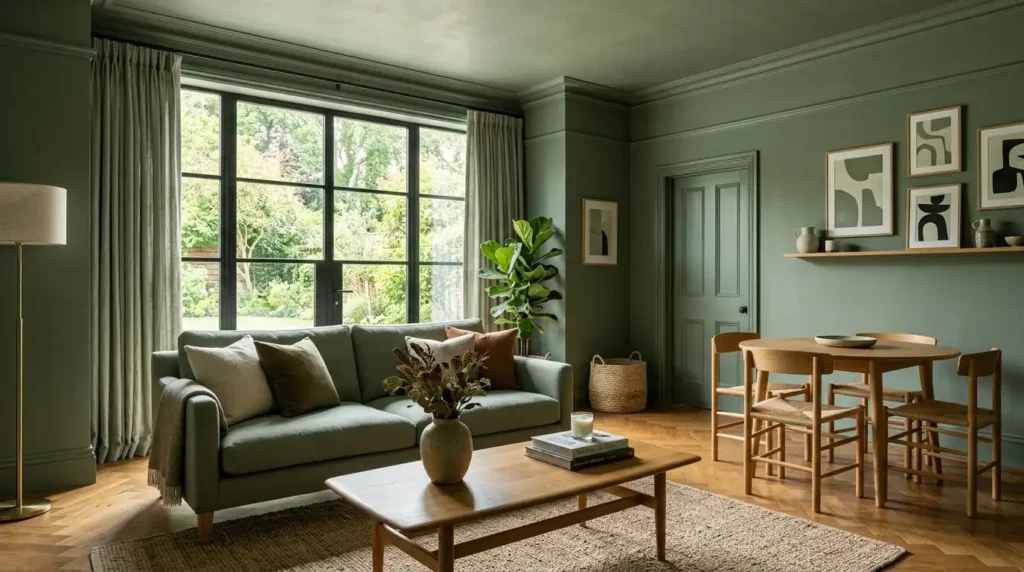
For decades, standard interior painting followed a strict, conventional formula: choose a wall color, paint the baseboards and door casings in bright white, and coat the ceiling in flat white paint. While this traditional approach creates clear visual boundaries, it often fragments a room and shrinks its perceived proportions. Modern interior design has shifted dramatically toward a far more immersive, sophisticated approach: colour drenching techniques.
By wrapping an entire room—walls, ceiling, doors, trim, radiators, and built-in cabinetry—in a single hue or closely related tonal palette, colour drenching blurs hard structural edges. The result is a seamless, enveloping space that feels intentionally designed, visually expansive, and deeply comforting. Whether applied using bold, moody tones or soft, warm neutrals, mastering colour drenching and its refined counterpart, tonal drenching, requires careful planning, proper sheen selection, and flawless execution.
Understanding Colour Drenching vs. Tonal Drenching
While both concepts eliminate the stark contrast of traditional white trim, they create distinct visual experiences within a home.
1. Monochromatic Colour Drenching
Monochromatic colour drenching involves applying one exact paint color across every single surface in a room. By removing the visual interruption of contrasting baseboards, crown molding, and door frames, the eye glides continuously around the space. This continuous flow softens room corners and makes low ceilings feel noticeably higher, creating a cozy “cocoon” effect in bedrooms, powder rooms, formal dining areas, and home libraries.
2. Tonal Drenching (Double Drenching)
For spaces where a single uniform shade might feel overly static, tonal drenching—sometimes referred to as double drenching—introduces subtle depth. Instead of using one single color, you select two or three shades from the very same color family. For instance, you might paint the main walls in a soft sage green, execute the trim and doors in a deeper olive green, and wash the ceiling in a pale, muted mint. This subtle gradient maintains a unified aesthetic while highlighting architectural details and wood moldings.
The Sheen Strategy: Creating Depth Without Changing Color
The secret to successful colour drenching lies in varying your paint sheens across different surfaces. Applying the exact same flat paint finish to every surface can leave a room looking flat and chalky. Utilizing strategic sheen contrast introduces light reflection, dimension, and durability where it matters most.
- Ceilings (Flat or Matte Finish): Ceilings should almost always be finished in a flat or matte sheen. Flat paint absorbs ambient light, eliminating unwanted glare from overhead light fixtures and concealing minor drywall imperfections.
- Walls (Eggshell or Low-Lustre Finish): An eggshell or velvet finish provides a soft, washable surface that absorbs enough light to keep rich colors grounded while allowing for easy cleaning in high-traffic living areas.
- Trim, Doors, and Millwork (Satin or Semi-Gloss Finish): Woodwork experiences the most physical wear and tear. Applying a durable satin or semi-gloss finish to baseboards, door frames, and built-ins reflects light subtly, making architectural trim pop against the matte background despite sharing the exact same color code.
Selecting the Ideal Palette for Drenched Spaces
 While early iterations of colour drenching leaned heavily into dark, moody jewel tones like deep navy and hunter green, modern palettes have evolved toward softer, earthier, and highly livable shades:
- Warm Earth Tones: Rich terracotta, clay red, warm taupe, and deep chocolate brown create inviting, luxurious environments that feel grounded and organic.
- Muted Greens and Botanical Shades: Sage, olive, and eucalyptus greens act as versatile modern neutrals, bringing natural serenity into bedrooms, home offices, and living rooms.
- Enveloping Warm Neutrals: Creamy off-whites, warm greige, and soft mushroom tones offer a gentle alternative to stark white, bathing spaces in soft, luminous light without feeling clinical.
Step-by-Step Execution for a Professional Finish
Executing a flawless colour-drenched room requires methodical preparation and precise application techniques to ensure seamless transitions between varying materials and paint sheens.
1. Surface Preparation and Patching
Because colour drenching draws attention to the overall architecture rather than isolated walls, surface flaws become more noticeable. Fill all nail holes, repair drywall stress cracks, and sand down existing trim rough spots. Apply a high-quality bonding primer over bare wood, glossy existing paint, or repaired drywall patches to ensure uniform paint absorption.
2. Caulking and Seam Sealing
In a drenched room, any gap between the baseboard and the wall or around window casings will disrupt the seamless flow. Apply a paintable acrylic latex caulk along all trim seams, door jambs, and crown moldings before applying paint. Smooth the caulk line completely to create clean, continuous transitions.
3. Order of Application
To maintain efficiency and clean lines when applying multiple sheens, follow a structured painting order:
- Paint the Ceiling First: Roll the flat ceiling paint first, feathering the edges slightly down onto the top of the walls.
- Paint the Trim and Doors Second: Apply your satin or semi-gloss finish to the crown molding, baseboards, door casings, and window frames using a high-quality synthetic angle brush.
- Paint the Walls Last: Once the trim is fully dry, cut in the wall lines neatly against the trim and roll the walls with your eggshell or matte finish.
Transforming Homes with Modern Colour Techniques
Colour drenching and tonal drenching offer transformative ways to modernize interior spaces without major structural renovations. By embracing seamless color palettes, mastering sheen contrast, and executing precise surface preparation, homeowners can turn ordinary rooms into sophisticated, enveloping retreats that feel cohesive, expansive, and timeless.