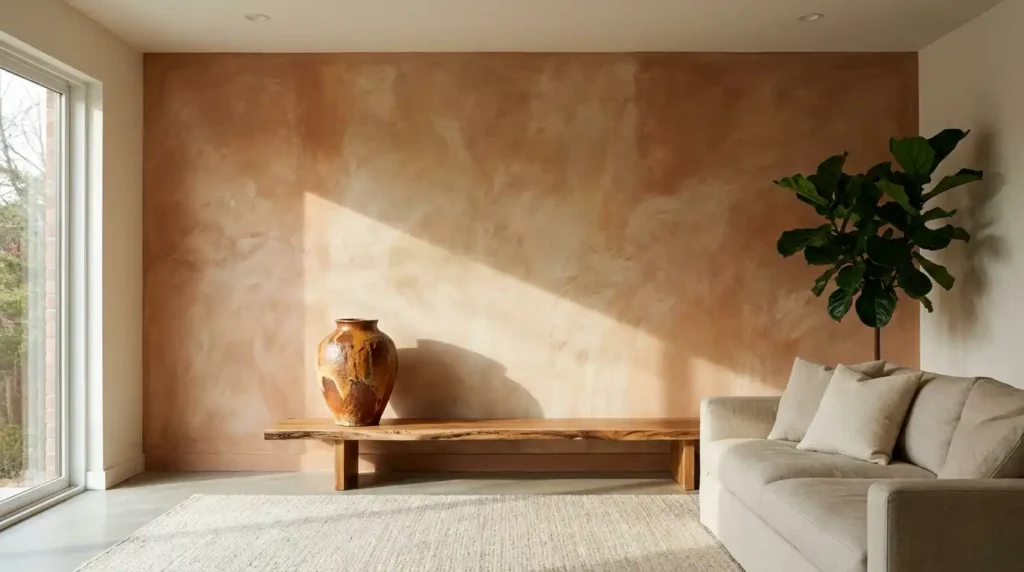
For more than a decade, high-end interior design was dominated by a single, uncompromising standard: the perfectly smooth, flat matte wall. Homeowners and designers routinely selected ultra-flat finishes to mask drywall imperfections and achieve a crisp, clinical, minimalist backdrop. However, interior aesthetics are undergoing a massive shift. The preference for sterile, one-dimensional surfaces is rapidly fading, replaced by a demand for warmth, character, and visual movement.
Enter the era of faux-texture paint. Today’s homeowners are moving away from flat planes and embracing organic, tactile surfaces that mimic old-world European architecture. From the chalky, mottled appearance of historical limewash to the rich, troweled depth of Venetian plaster, faux-texture painting techniques have emerged as the premier way to elevate residential spaces. These specialized applications transform flat drywall into dynamic architectural features, proving that paint can do far more than simply change the color of a room.
The Shift to Sensory Surfaces: Why Flat Walls Are Fading
 The sudden surge in texture-forward wall treatments is no accident. It represents a broader cultural pivot toward “soft modernism” and biophilic design—an approach that emphasizes natural materials, earthy tones, and wellness-focused environments. While a flat matte wall can feel cold and industrial, a textured wall interacts with light, casting micro-shadows that shift throughout the day as natural sunlight moves across the room.
This sensory experience is precisely why standard multi-coat latex applications are losing ground in luxury spaces. Flat finishes absorb light uniformly, which can make large, open-concept rooms feel boxy or uninspired. Faux-texture finishes, on the other hand, introduce an organic variation known as “mottling.” This subtle blending of light and dark tones creates an illusion of age and substance, giving even a newly constructed suburban room the grounded, permanent feel of a historic Mediterranean villa or a high-end desert retreat.
Product Breakdown: Limewash vs. Roman Clay vs. Suede Paint
Achieving a high-end textured look no longer requires importing authentic, delicate Italian plasters or working with hyper-caustic traditional lime mixtures. Modern paint technology, combined with specialized professional application methods, allows painters to replicate these sophisticated surfaces using durable, user-friendly mediums. Here is a look at the most requested faux-texture products on the market:
1. Faux Limewash (Chalky Acrylics)
Traditional limewash is made from crushed limestone and water, which cures through carbonation. While beautiful, it is highly porous and notoriously difficult to clean. Modern faux limewash uses specialized acrylic formulas that mimic the ultra-matte, chalky, and velvety appearance of real lime. Professional painters apply these products using a classic “cross-hatch” or figure-eight brushing technique. As the overlapping layers dry, they naturally create the tonal variations and cloud-like patinas characteristic of genuine old-world walls.
2. Roman Clay and Micro-Plasters
For homeowners who want physical texture rather than just a visual illusion, Roman clay is the ideal choice. Applied with a putty knife or a stainless-steel trowel rather than a brush, Roman clay is a specialized plaster-based compound that goes on in thin, overlapping layers. The smooth trowel strokes create a low-sheen, stone-like finish that feels incredibly soft to the touch. It provides an elegant, structured depth that perfectly complements contemporary, minimalist, or rustic aesthetics.
3. Suede and Micro-Cement Effects
Suede paint is an innovative acrylic formula embedded with micro-textures that replicate the soft, brushed look of premium suede leather. When applied using specific cross-hatching motions, the paint dries with a rich nap effect that absorbs light beautifully. For a moodier, industrial aesthetic, similar micro-cement specialty paints can be troweled onto accent walls or fireplace surrounds to deliver a raw, architectural concrete look without the structural weight or expense.
The Professional Touch: Artistry in Application
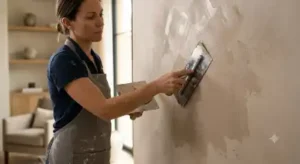 Unlike standard interior painting—where the primary goal is a perfectly uniform, stroke-free coat—applying faux-texture paint is an explicit form of structural artistry. Every wall requires a distinct level of craftsmanship, as the painter’s physical movements directly dictate the final pattern of the room.
To execute a flawless faux limewash look, professionals carefully manage wet edges to prevent harsh, overlapping transition lines. They utilize specialized block brushes with long, natural bristles capable of holding the heavy, high-solids paint body. For clay and plaster effects, the pressure, angle, and direction of the trowel are varied systematically to ensure the texture looks organically random rather than mechanical or repetitive. This highly customized process ensures that no two faux-textured walls are identical, providing a truly bespoke feature for the home.
Pros and Cons: What Homeowners Need to Know
Before committing to a texture-forward transformation, it is vital to understand how these specialized finishes perform in day-to-day residential settings compared to standard drywall finishes.
| Aesthetic & Operational Factors | Faux-Texture Paint Effects | Traditional Flat Matte Paint |
|---|---|---|
| Visual Depth | High; dynamic mottling that reacts beautifully to ambient light. | Low; uniform, solid color layer with minimal light play. |
| Tactile Feel | Varies from a soft, chalky velvet to a smooth, cool stone finish. | Standard smooth, dry drywall surface. |
| Durability & Washability | Moderate; high-solids formulas stand up well, but scuffs may require specific care. | Low to Moderate; flat mattes burnish easily when scrubbed. |
| Maintenance & Patching | Requires artistic blending to spot-repair; blending requires replicating the texture pattern. | Easy to patch and roll over, though flashing can sometimes occur. |
While faux-texture finishes excel in dining rooms, primary bedrooms, offices, and living room accent walls, they require strategic consideration in high-moisture or high-traffic zones like narrow hallways and bathrooms. Because true texture can capture dust or prove more complex to wipe down than a high-sheen satin paint, a professional application often involves applying specialized, breathable matte sealers over the faux finish to lock in the look while boosting its stain resistance.
Transforming Your Space with Depth and Dimension
The decline of the flat matte wall marks an exciting return to character-driven interior design. By embracing the organic movement of faux limewash, the stone-like grounding of Roman clay, or the velvet luxury of suede effects, you can introduce a sense of architectural permanence to your home. Faux-texture painting bridges the gap between old-world masonry and modern drywall, providing a sophisticated, tactile solution for homeowners ready to step away from the flat paint paradigm and move toward spaces that look, feel, and live with undeniable depth.